
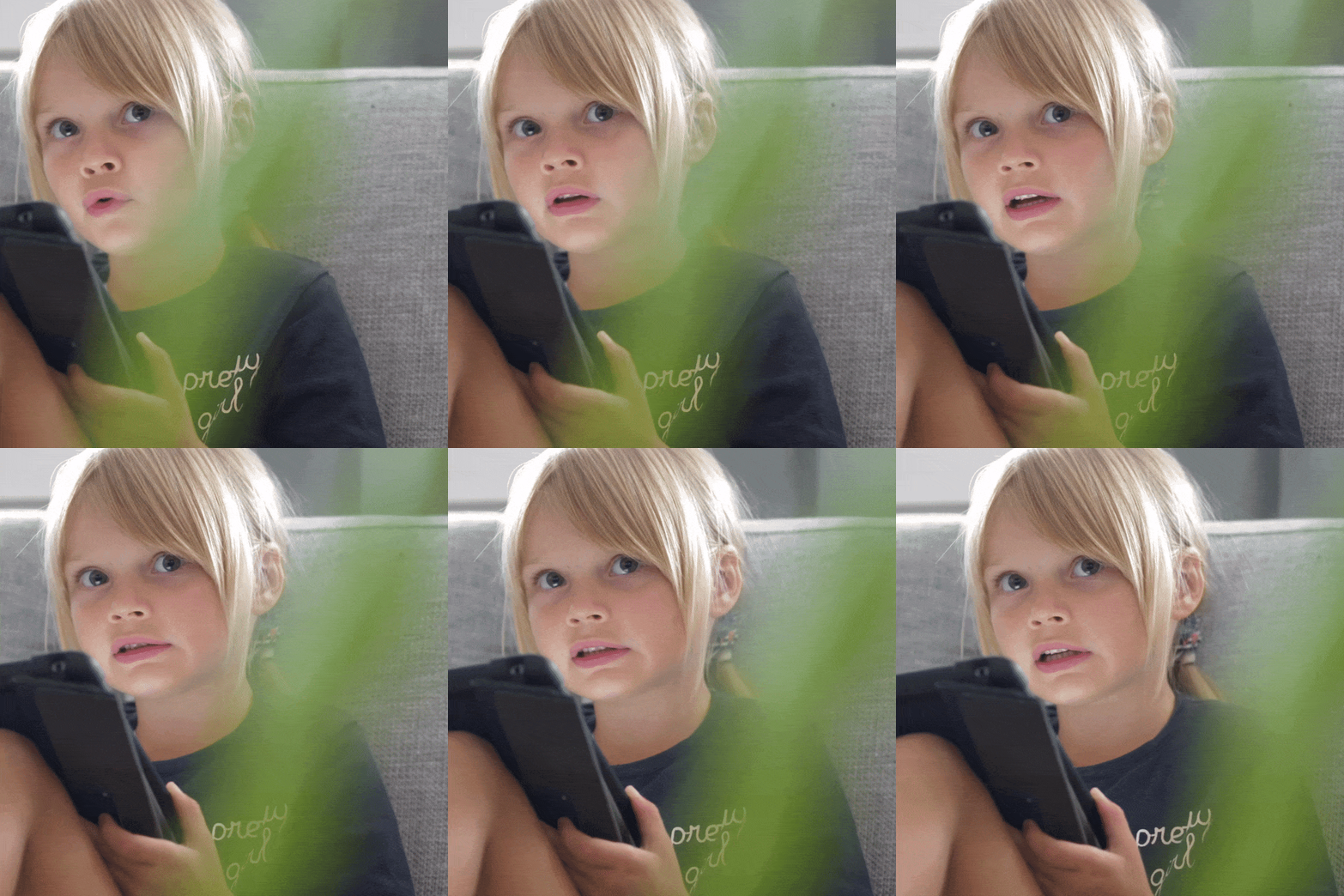
The front row funeral seats are the ones that nobody wants to sit at and yet the UK’s first children and young people’s bereavement charity, Winston’s Wish, is keen to remind those in the funeral and crematorium services of the bereaved young people who often fill those seats.
There are often differing narratives when it comes to whether or not children or young people should attend the funeral of somebody significant to them. It is natural for adults to want to protect a child following a bereavement, especially when the death hits close to home, however it’s important to remember that young people may experience fear in the face of uncertainty.
Paul Parsons, Head of Clinical Services at Winston’s Wish explains how important is for children and young people to be given the option to choose for themselves. He comments, “It is vital that children and young people are remembered when it comes to arranging or attending a funeral. Post bereavement can be an especially confusing time, in particular for young children who may be struggling to comprehend what is happening.”
Winston’s Wish has spoken to many children who are pleased that they were able to attend the funeral and we have spoken to many others who did not go and later deeply regretted it. In order to make a sensible choice about going or not, these young people need to know what is involved. A funeral can help a young person understand the finality of death and come to terms with their own emotions.
Paul highlights, “Both younger and older children feel more secure when they know exactly what is happening which is why we recommend using direct language. It’s natural that we as adults shy away almost from saying ‘death’ or ‘died’ and prefer to use more indirect language such as ‘lost’ or ‘passed away’. For a young child though, this may add to the confusion or give a false sense of hope.
“Younger children often display what we call ‘Puddle jumping’ which is when one moment they seem consumed with their grief and the next minute they are asking what’s for tea, in essence, jumping in and out of their emotions. This is a normal way for younger children to respond to their bereavement.”
It is important too for older children such as teenagers or young adults to have the option to be included in funeral arrangements and whether or not to attend. For some, they might want to help make decisions such as regarding flowers or music played during the service, others may wish to read a poem or share a memory of the person who died. Of course, some young people may not feel ready or willing to publicly express their emotions, but it’s helpful to allow them the option.
Paul explains, “It’s important to remember the so called ‘forgotten mourners’, when somebody dies, it’s natural and appropriate to look to the older grievers but there are often children and young adults who are also mourning their loved one and who need the support too.
“In the aftermath of a bereavement, the world around these young people changes in a significant way and it’s beneficial to help them to view their own emotions as normal and relevant when they feel included in a funeral, service or some other commemoration.”
Simple gestures such as writing a card, taking a moment to acknowledge their grief, sharing a favourite memory of their loved one and so on can have a powerful impact and helps the young person to validate their grief and normalise their emotions.
Each bereaved family has the decision to view the body and many adults automatically decide against their children or young people from viewing the body. Of course, viewing a body after death is not an easy decision and some may choose not to view their dead loved one.
To assist a young person in deciding what they should do, it’s helpful for the young person to be fully aware of what will be involved in viewing a body; including explaining that the body will look different and be cold to the touch. As with each aspect of bereavement, clear communication is key so that the child or young person is fully aware of.
“Expect pertinent or even blunt questions,” Paul advises. “Young people can sometimes take adults by surprise by their sudden maturity one moment and by asking questions that make us feel uncomfortable. Our own sympathy for the circumstance the young person is facing can cloud our clarity of communication but a good way to be reassuring and be practically supportive is to give age appropriate but concise answers.”
Each day, estimates suggest that more than 120 young people are bereaved of a parent and that figure doesn’t equate how many are coping with the death of a sibling, friend or another significant person in their lives. Winston’s Wish continues to reach and support bereaved young people and the adults around them when their worlds are turned upside down by grief and encourages organisations to signpost their services to those who may require bereavement support.
Winston’s Wish is keen to reassure funeral directors and others in bereavement services as well as grieving young people and their families that they are welcome to chat online, email or call for free to speak to a bereavement support worker by calling 08088 020 021, emailing ask@winstonswish.org or using the live chat at winstonswish.org.


